Guide / Markets Explained
Who Are the Market Makers Behind XRP Trading?
Market makers are the firms, traders and algorithms that continuously quote prices at which they are prepared to buy and sell. They can make XRP markets cheaper and easier to trade, but the term is also sometimes misused in crypto, where regulators have prosecuted firms that disguised wash trading as 'market making'.
Share this article
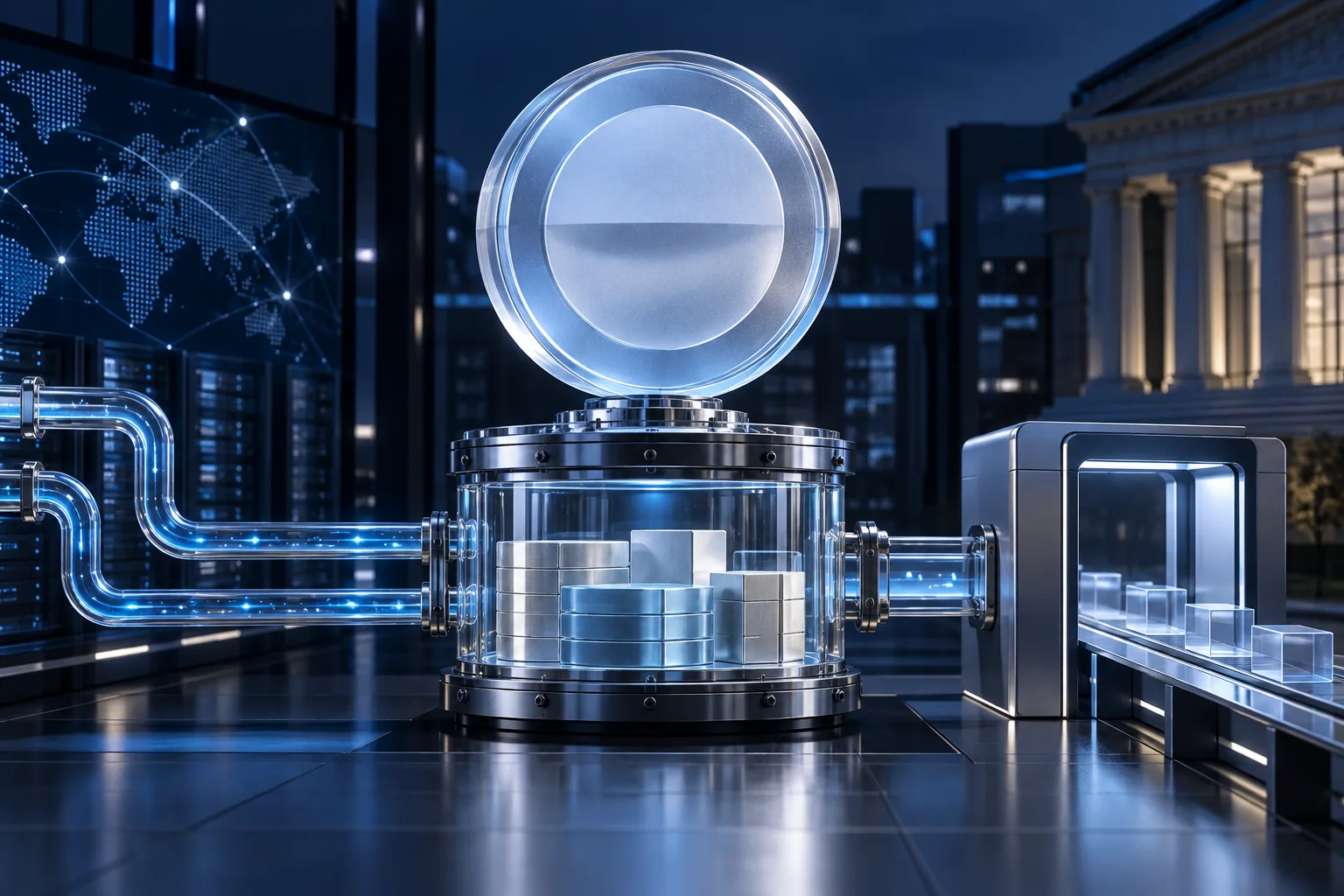
A functioning market has a timing problem. The person who wants to sell right now may not arrive at the exact moment another person wants to buy the same amount. Without someone willing to stand in the middle, trading becomes slow, expensive and unpredictable.
That middle role is where market makers come in. They are not unique to crypto. They are a basic piece of modern market infrastructure, from shares and bonds to foreign exchange and digital assets.
What a market maker actually does
A traditional market maker continuously shows two prices: a bid, where it is willing to buy, and an ask, where it is willing to sell. The difference is the spread. By standing ready on both sides, the market maker gives other participants a better chance of trading immediately rather than waiting for a natural counterparty.
In return, the market maker hopes to earn money from spreads, exchange incentives, arbitrage and efficient inventory management. It also takes risk. If it buys XRP from a seller and the market immediately falls before it can hedge or resell, the market maker can lose money.
Market makers do not need to predict the long-term XRP price
A common misconception is that every large trading firm is making a giant directional bet. Many market-making strategies are closer to running a supermarket than running a hedge fund. The goal is to keep inventory moving, buy slightly lower, sell slightly higher, manage risk and repeat the process many times.
This is why market makers can be active during both bull and bear markets. They are often selling during rallies and buying during declines because they are servicing order flow, not necessarily because they believe XRP is overvalued or undervalued.
Who can be a market maker in crypto?
On centralised exchanges, professional quantitative trading firms, proprietary trading desks and specialised crypto liquidity providers can all perform market-making functions. Exchanges may offer fee arrangements to encourage tighter spreads and larger quoted size. OTC desks also contribute to liquidity by matching or warehousing large institutional trades outside the public order book.
On XRPL, the picture is broader. Traders can place Offers in the native decentralised exchange. Liquidity providers can also deposit assets into Automated Market Makers. An AMM is not a traditional dealer sitting behind a screen, but economically it performs a related job: it makes assets available for exchange according to a formula and earns trading fees for the liquidity pool.
What does this have to do with XRP's payment role?
If XRP is used as a bridge asset, somebody must be prepared to buy it on one side of a transaction and sell it on the other. Tighter spreads and deeper markets reduce the cost of that conversion. Ripple's original 2017 explanation of its escrow explicitly discussed using XRP for incentives to market makers offering tighter spreads for payments, although that historical statement should not be read as a description of every current market-making arrangement.
This is the practical reason liquidity providers matter to XRP. A bridge asset without a competitive market is like an airport with no connecting flights.
Do market makers control the price?
They can influence short-term market behaviour because their quotes make up a large part of the order book. When risk rises, market makers may widen spreads, pull orders or reduce size. When competition is strong, they tend to quote more tightly. Their algorithms can also arbitrage price differences across exchanges, pulling separate markets back toward each other.
That is influence, not absolute control. A market maker cannot indefinitely hold XRP at a price where genuine buyers and sellers are willing to trade huge amounts in the opposite direction without taking growing losses. Large market makers shape the path of price discovery, but the broader supply of capital and inventory still matters.
The uncomfortable part: 'market maker' can also be a cover story
Crypto has produced genuine cases where firms marketed themselves as liquidity providers while using bots to create artificial volume or manipulate prices. In 2024 US authorities charged multiple firms and individuals over alleged crypto wash trading. In August 2026 the US Department of Justice announced the sentencing of the founder of MyTrade, whose service had used bots for wash trading across dozens of cryptocurrencies.
That behaviour is not legitimate market making. Real market making provides executable two-sided liquidity and accepts economic risk. Wash trading creates fake activity by trading with oneself or coordinated accounts to mislead the market.
How can investors tell the difference?
Retail investors rarely know the identity behind every order. But they can look for healthier market characteristics: consistent depth on both sides, competitive spreads, volume that corresponds with real order-book liquidity, price alignment across reputable venues and the ability to execute meaningful trades without extreme slippage.
Suspiciously huge volume in a thin market should make investors more cautious, not more confident.
Related reading: see why liquidity matters for XRP, what trading bots can and cannot control and why buying pressure matters more than headlines.
The bottom line
Market makers are not mysterious organisations whose only purpose is to suppress XRP. At their best, they are the plumbing that lets buyers and sellers transact cheaply and continuously. They take inventory risk in exchange for spreads and other trading economics.
But crypto history also shows why the label should not be accepted blindly. The useful distinction is not 'market maker versus retail'. It is legitimate liquidity provision versus deceptive activity designed to manufacture the appearance of a market.
XRP for Newbies
A market maker is like a currency-exchange booth that is always willing to both buy and sell. It buys XRP from people who want to sell and sells XRP to people who want to buy, earning a small difference between the two prices. Good market makers make trading easier and cheaper. A fake market maker that trades with itself just to create artificial volume is doing something very different.
Editorial disclaimer: For education and general information only. Nothing in this article is financial advice or a price prediction.
Sources
- Charges against so-called crypto market makers (Oct 2024) ↗
U.S. Securities and Exchange Commission · Accessed 2026-09-10
- Ripple Escrows 55 Billion XRP for Supply Predictability (2017) ↗
Ripple · Accessed 2026-09-10
- Business model definitions: market makers primarily provide liquidity ↗
FINRA · Accessed 2026-09-10
- Automated Market Makers ↗
XRPL.org · Accessed 2026-09-10
- Offers ↗
XRPL.org · Accessed 2026-09-10
- MyTrade founder sentenced for crypto market manipulation (Aug 6, 2026) ↗
U.S. Department of Justice · Accessed 2026-09-10
- Report discussing market makers, bids, asks and dealer spreads ↗
U.S. Securities and Exchange Commission · Accessed 2026-09-10
CONTINUE READING
Related articles
GuideMarkets Explained
If Banks Use RLUSD, Do They Actually Need XRP?
Banks can settle in RLUSD without using XRP as the payment asset, although XRP still powers fees and may provide optional liquidity or bridge routes on XRPL.
GuideMarkets Explained
How Would an Auditor Value XRP Held by a Corporation?
Auditing corporate XRP requires evidence of existence, legal control, complete records and a defensible market price—not merely a visible blockchain balance.
GuideMarkets Explained
What Would XRP Look Like on a Company's Balance Sheet?
XRP is generally not cash or a financial asset under IFRS. Its classification, measurement and presentation depend on the framework and how the company uses it.