Analysis / Markets Explained
Are Bots Really Controlling the Crypto Market - and XRP?
Trading bots are real, common and sometimes powerful. They quote prices, arbitrage exchanges, execute large orders and can even be used illegally for wash trading or spoofing. But saying bots 'control' XRP or the entire crypto market confuses short-term market mechanics with long-term economic demand.
Share this article
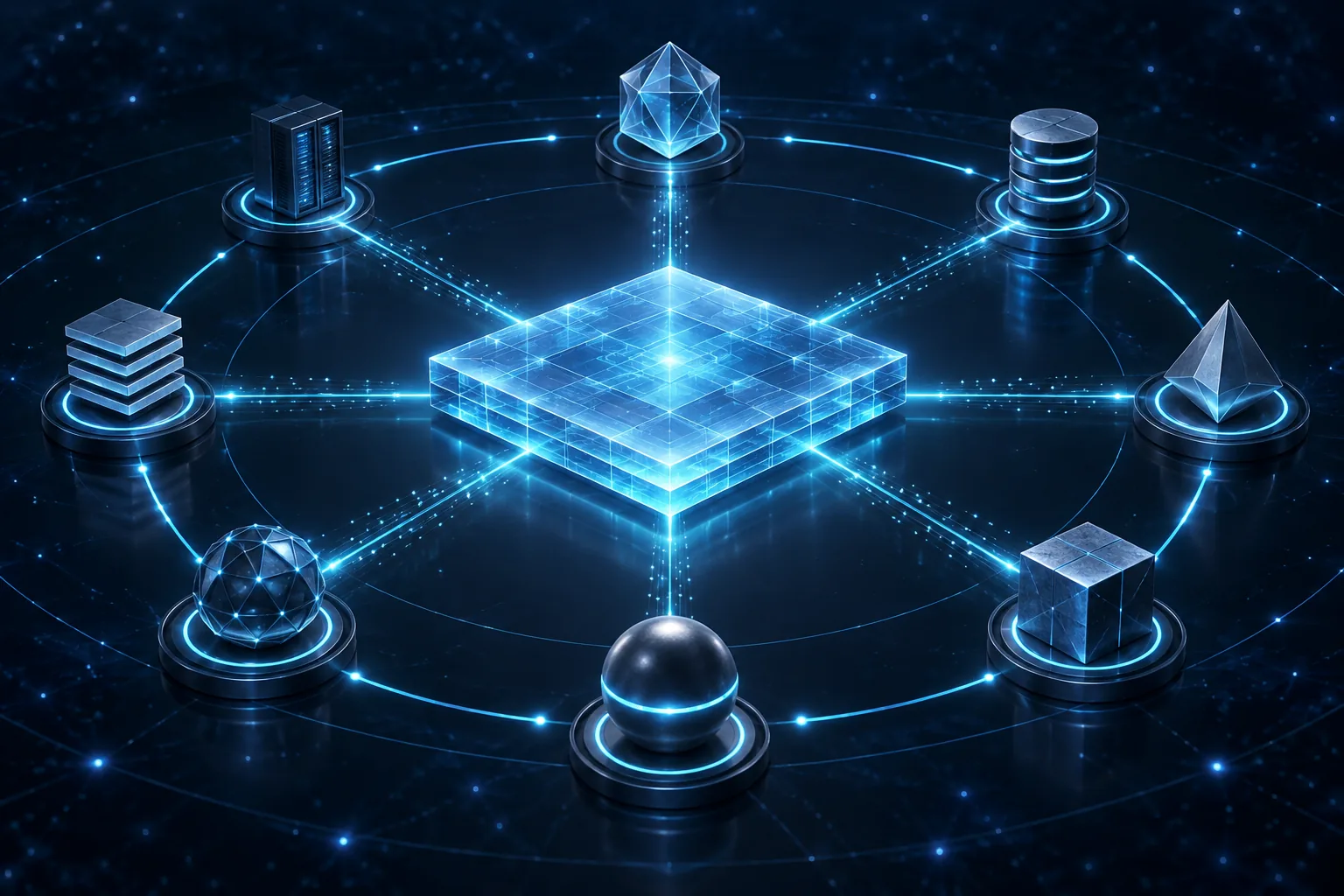
Modern markets move faster than people can click. A human trader cannot watch hundreds of exchanges, recalculate thousands of prices and respond in milliseconds. Computers can. That is why algorithmic trading is not a fringe feature of finance; it is part of the machinery.
Crypto takes that machinery and runs it twenty-four hours a day. So when XRP repeatedly bounces from a price level, drops instantly with Bitcoin or shows thousands of orders appearing and disappearing, it is reasonable to suspect bots are involved. The mistake comes when 'bots are involved' becomes 'bots control everything'.
There is no single type of trading bot
Some bots are market makers. They continuously post bids and offers, changing quotes as volatility and inventory change. Some are arbitrage bots, buying XRP where it is cheaper and selling where it is more expensive. Others execute large institutional orders gradually so one trade does not shock the market.
There are also liquidation systems on leveraged venues, rebalancing programs, index strategies and portfolio bots. Most of these activities are not sinister. They automate decisions that traders could theoretically make by hand, only faster and more consistently.
Bots can make prices look strangely coordinated
Suppose XRP trades at slightly different prices on two exchanges. An arbitrage program can buy the cheaper market and sell the dearer one within seconds. That pushes the two prices back together. To a person watching charts, it can look as if every exchange is being controlled from one place. In reality, competition between automated traders is producing the coordination.
The same thing happens when Bitcoin suddenly falls. Risk models across many firms can react to the same information at nearly the same time, selling correlated assets. Similar algorithms receiving similar signals can create herd-like movement without a secret central controller.
But manipulative bots are real too
The sceptics are not imagining everything. US regulators and prosecutors have brought cases involving bots used for wash trading, spoofing and artificial volume in crypto markets. In one US enforcement operation, authorities described automated systems making self-trades and generating fake activity across dozens of tokens. The SEC has also alleged that so-called market makers used algorithms to manufacture enormous amounts of artificial volume.
These cases prove that automated manipulation can happen. They do not prove that every XRP move is manipulated, or that a single group can dictate XRP's global price indefinitely.
Short-term influence is easier than long-term control
A bot can move a thin order book. It can trigger stop-loss orders, exploit liquidations or temporarily distort reported volume. A large participant can also push the market around when liquidity is poor. But holding a major global asset at an artificial price for a long period is much more expensive.
If XRP were forced materially below the price where genuine investors wanted to buy, buyers and arbitrageurs would absorb the cheap supply. If it were forced too high, holders would have an incentive to sell into the artificial strength. Manipulation can change the path and timing of price discovery, but economic gravity becomes harder to fight as capital and liquidity increase.
What about bots on the XRP Ledger itself?
XRPL openly supports algorithmic trading on its decentralised exchange. Developers can read public market data, place Offers and interact with AMMs. That does not mean the ledger was designed for millisecond high-frequency trading. XRPL documentation notes that DEX trades execute when ledgers close, roughly every three to five seconds, and that transaction ordering is designed to be difficult to game. It explicitly says the native DEX is not suitable for high-frequency trading in the conventional sense.
In other words, automation is part of XRPL's trading ecosystem, but the network's mechanics are different from a centralised exchange matching orders in microseconds.
Why the 'bot suppression' story is so appealing
Markets are emotionally difficult because no one has to explain why a price is disappointing. A visible enemy provides a cleaner story. If XRP is not rising, a suppression bot sounds more satisfying than the possibility that current buying demand is simply not strong enough to overpower available supply.
That does not mean manipulation should be dismissed. It means claims should be testable. Which venue? Which orders? What pattern? Is there evidence of self-trading, spoofing or coordinated accounts? Does the anomaly persist across independent exchanges? Without that evidence, a repeating chart pattern is not proof of control.
What bots can and cannot do
Bots can provide liquidity, remove price differences, react to news faster than humans, amplify short-term volatility and, when abused, manipulate thin markets. They can also withdraw liquidity in stressed conditions and make price moves feel abrupt.
What they cannot do for free is permanently override the combined decisions of all buyers and sellers across a deep global market. The larger and more liquid XRP becomes, the more capital is required to distort it for long periods.
Related reading: compare bots with legitimate market making, the mechanics of XRP liquidity and the demand behind XRP price moves.
The bottom line
Yes, bots are a major part of crypto trading. Yes, some have been used illegally. No, that is not evidence that bots secretly determine XRP's long-term value.
The better way to think about them is as market machinery. Machinery can improve efficiency, magnify shocks or be abused by bad actors. But over time, XRP's price still depends on the harder economic questions: who wants to own it, who wants to use it, how much liquidity exists, and what price buyers and sellers are willing to accept.
XRP for Newbies
Bots are computer programs that trade automatically. One bot might keep offering to buy and sell XRP. Another might buy XRP on one exchange when it is cheaper and sell it on another when it is more expensive. Bad actors can also use bots to fake volume or manipulate thin markets. Bots can affect short-term price movement, but that is very different from proving that bots control XRP's long-term price everywhere.
Editorial disclaimer: For education and general information only. Nothing in this article is financial advice or a price prediction.
Sources
- Charges against so-called crypto market makers (Oct 2024) ↗
U.S. Securities and Exchange Commission · Accessed 2026-09-10
- Eighteen individuals and entities charged in crypto manipulation operation (Oct 9, 2024) ↗
U.S. Department of Justice · Accessed 2026-09-10
- MyTrade founder sentenced for crypto market manipulation (Aug 6, 2026) ↗
U.S. Department of Justice · Accessed 2026-09-10
- Decentralized Exchange ↗
XRPL.org · Accessed 2026-09-10
- Algorithmic Trading ↗
XRPL.org · Accessed 2026-09-10
- Determinants of wash trading in major cryptoexchanges (Sep 2026) ↗
International Review of Financial Analysis · Accessed 2026-09-10
CONTINUE READING
Related articles
GuideMarkets Explained
If Banks Use RLUSD, Do They Actually Need XRP?
Banks can settle in RLUSD without using XRP as the payment asset, although XRP still powers fees and may provide optional liquidity or bridge routes on XRPL.
AnalysisMarkets Explained
Can XRP Reduce Corporate FX Hedging Costs?
XRP does not remove currency risk, but faster settlement may reduce selected liquidity, settlement and short-window exposure costs around corporate FX.
AnalysisMarkets Explained
Could XRP Become a Treasury Asset for Corporations?
A corporate XRP allocation may support specific payment or liquidity needs, but it must compete with cash on governance, volatility, custody and accounting.