Analysis / Adoption
BRICS Payments After the 2026 Summit: What Is Real, and Where Does XRP Fit?
BRICS has renewed its cross-border payment agenda, but interoperability discussions are not a single operating monetary system. Examine BRICS Pay, local currencies and the evidence behind XRP claims.
Share this article
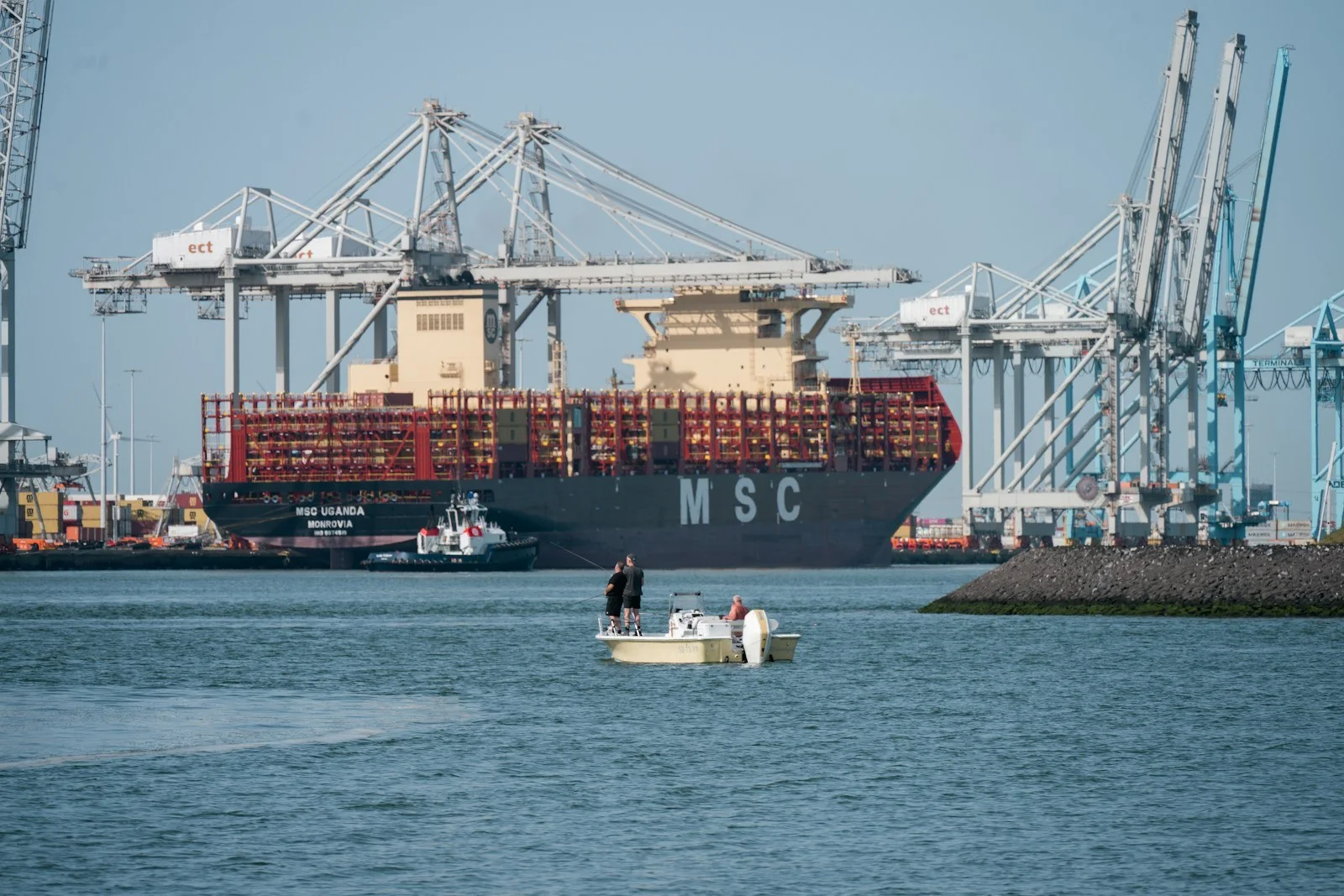
An exporter does not need a new geopolitical slogan to receive payment. It needs a currency it can use, a reliable banking or payment connection, a competitive exchange rate and confidence that the transaction will comply with the rules. BRICS payment proposals are worth examining through those practical requirements rather than through predictions that the dollar—or SWIFT—will suddenly disappear.
The latest summit provides a timely test. The New Delhi declaration dated 12 September 2026 renews the bloc's cross-border payment work. It does not announce a universal BRICS currency, a completed common settlement network or the selection of XRP.
This analysis was checked on 14 September 2026. Confirmed policy, project promoters' claims and this article's theoretical XRP analysis are kept separate.
What BRICS is—and what it is not
BRICS is a grouping for cooperation among major emerging economies, originally Brazil, Russia, India, China and South Africa, and subsequently expanded to include additional countries. It is not a currency union with a single central bank. Its members retain different currencies, monetary policies, capital controls and political priorities.
Those differences shape its payment ambitions. Some members want cheaper trade settlement; others also want less exposure to sanctions or foreign-controlled infrastructure. Agreement to explore alternatives does not mean agreement on who would operate a shared system, provide liquidity or bear losses.
The newest declaration is about continued interoperability work
Paragraph 90 of the 2026 New Delhi declaration acknowledges the BRICS Payment Task Force's exploration of practical cross-border mechanisms. It refers to studying interoperability of payment and messaging channels and discussing local-currency trade and investment settlement. It recognises national priorities and encourages continued work.
This is evidence that the official agenda has progressed through cooperation and study. It is not a technical launch notice. The distinction is consistent with the 2025 Rio declaration, which called for further discussion of the cross-border payments initiative and possible interoperability pathways.
A political declaration rarely supplies operational statistics. To establish deployment at scale, readers would need identifiable participating institutions, production rules, settlement assets, actual transaction activity and safeguards for disputes and outages. The reviewed declarations do not supply that evidence for one common BRICS-wide replacement system.
BRICS Pay is a related initiative, not every BRICS policy
The BRICS Pay website markets an ecosystem connecting national payment tools and currencies for travellers and businesses. Its proposals should be attributed to the project rather than treated as unanimous central-bank decisions.
The BRICS Business Council's 2023/24 annual report describes commercial development, a bilateral technical assessment and QR-payment work involving the UPI format. It discusses further testing and related messaging and clearing proposals. This is more specific than a summit slogan, but a report describing a pilot or commercial ambition does not prove universal operational access or sustained cross-border volume.
Keep the layers separate. A QR interface can initiate a payment. A messaging system can transmit instructions. Clearing calculates obligations; settlement discharges them using money or another agreed asset. A demonstration at one layer does not establish a functioning replacement for every other layer.
That is also why “an alternative to SWIFT” can be misleading. SWIFT is primarily a financial messaging network, not the dollar itself or the bank balances used to settle obligations. Its own description distinguishes messaging from holding funds or managing accounts. Changing messages does not automatically remove correspondent banking, foreign-exchange conversion or the need for reliable settlement money.
Local currencies, digital currencies and common-currency claims
Settling some bilateral trade in domestic currencies is possible without inventing a shared currency. But an exporter paid in a currency it cannot easily spend or convert still has a problem. Trade imbalances can leave one side accumulating unwanted balances. Credit markets, hedging and reliable convertibility matter as much as the payment connection.
Central-bank digital-currency interoperability is another possible route. Project mBridge is a useful example of real multi-central-bank experimentation: the BIS announced its minimum viable product stage in June 2024, and its 2024/25 annual report describes an orderly transfer to partner central banks. That does not make mBridge a BRICS-wide network or an XRP project.
A common BRICS currency would require additional decisions about issuance, governance, backing, convertibility and monetary control. A gold-backed token would require verified custody, ownership and redemption rights as well as liquidity. The 2026 declaration reviewed here does not establish such a launched currency. Gold references or proposals circulating outside it are not proof that members have adopted one.
Has XRP been selected?
No verified primary-source evidence was found in the reviewed BRICS declarations, BRICS Pay material or Ripple announcements that XRP has been selected, integrated or officially considered as the settlement asset for a BRICS payment system. That is a bounded finding about the evidence reviewed, not a claim to know every private institutional discussion.
One traceable narrative illustrates the problem. An August 2026 CCN fact-check identifies a June 15 social-media post claiming a route through Standard Chartered. The article connects the rumour to the bank's historical Ripple relationships and claimed BRICS Pay links. This is evidence of how the claim circulated, not evidence validating its underlying integration assertions.
A bank's relationship with Ripple does not show that all of its payments use XRP. Even a verified bank connection to a separate payment network would not demonstrate that XRP crosses that network. The missing evidence is the actual integration, named asset, production use and an attributable confirmation from the responsible parties.
The claims are easy to spread because several true or plausible ideas sit close together: interest in local currencies, experimentation with digital money and XRP's cross-currency design. Proximity is not a chain of proof. A technical description of what XRP could do cannot establish what BRICS has chosen.
Could XRP work as a bridge in theory?
Technically, XRP could be an intermediary between assets with liquid entry and exit markets. The XRPL's auto-bridging documentation demonstrates conditional routing between tokens through XRP when it improves execution. A broader institutional payment arrangement could explore a similar economic role, subject to its own design and rules.
Potential benefits include a commonly tradable intermediary and less exposure to a stablecoin issuer's redemption promise while holding the bridge asset. But “neutral” needs qualification: no issuing central bank promises XRP redemption, yet institutions still depend on exchanges, custodians, liquidity providers and regulated fiat connections. Those dependencies have jurisdictions and political constraints.
Volatility creates inventory and execution risk. Thin local-currency pairs create spreads and slippage. Large trade payments need depth at the actual ticket size, not simply a global market-capitalisation headline. Rapid ledger settlement does not make a restricted currency freely convertible or accelerate every domestic bank payout.
Sanctions and compliance do not disappear on a public ledger. An institution may be unable or unwilling to service a transaction regardless of technical transferability. Central banks may also prefer infrastructure they can govern directly and settlement claims denominated in their own currencies. CBDCs, deposits and stablecoins can be more compatible with those preferences, although each carries different risks.
The political question is therefore distinct from the technical one. XRP could be examined as a bridge where institutions accept it and the markets are competitive. There is no basis in the reviewed evidence to say it has won that role in BRICS. Progress should be judged by operating systems and disclosed asset choices, not by theories that fill the gaps between declarations.
XRP for Newbies
BRICS countries want to improve how money moves between them, but they have not become one country with one currency. Payment plans, QR demonstrations and a working international settlement system are different things. XRP could help exchange currencies in some designs, but that possibility is not proof BRICS uses it. Look for an official confirmation naming the asset and explaining what is actually live.
Sources
- BIS: mBridge minimum viable product announcement ↗
BIS: mBridge minimum viable product announcement · Accessed 2026-09-13
- CCN: Trace of Standard Chartered and XRP social-media claim ↗
CCN: Trace of Standard Chartered and XRP social-media claim · Accessed 2026-09-13
- BRICS Brazil presidency: Rio declaration, July 2025 ↗
BRICS Brazil presidency: Rio declaration, July 2025 · Accessed 2026-09-13
- BRICS Pay: Project website ↗
BRICS Pay: Project website · Accessed 2026-09-13
- BIS: Annual Report 2024/25 ↗
BIS: Annual Report 2024/25 · Accessed 2026-09-13
- Prime Minister of India: BRICS New Delhi declaration, September 12, 2026 ↗
Prime Minister of India: BRICS New Delhi declaration, September 12, 2026 · Accessed 2026-09-13
- BRICS Business Council: 2023/24 annual report and payment proposals ↗
BRICS Business Council: 2023/24 annual report and payment proposals · Accessed 2026-09-13
- Auto-Bridging ↗
XRPL.org · Accessed 2026-09-08
- SWIFT: Financial messaging and cross-border payments ↗
SWIFT: Financial messaging and cross-border payments · Accessed 2026-09-13
CONTINUE READING
Related articles
AnalysisAdoption
Could Companies Use XRP for Working Capital Between Countries?
XRP could shorten parts of a multinational funding cycle and reduce some idle foreign cash, but it cannot remove inventory, payroll or regulatory funding needs.

AnalysisAdoption
If XRP Is Faster and Cheaper, Why Isn't Everyone Using It?
The technically superior product does not always win. For banks, the cost of changing infrastructure can exceed the transaction fee being saved — especially when regulation, liquidity and operational risk are included.

AnalysisAdoption
What Would Make Banks Hold XRP Instead of Simply Using XRPL?
Banks need a balance-sheet reason to hold XRP. Settlement inventory, market-making and collateral may qualify, but volatility, capital and compliance remain barriers.